


Boeing and SpaceX are racing to become the first private companies to carry astronauts into space, as early as next year.
And although SpaceX is generally considered to be leading the race (it already delivers supplies to the space station), Boeing shouldn't be underestimated (the company built most of the International Space Station).
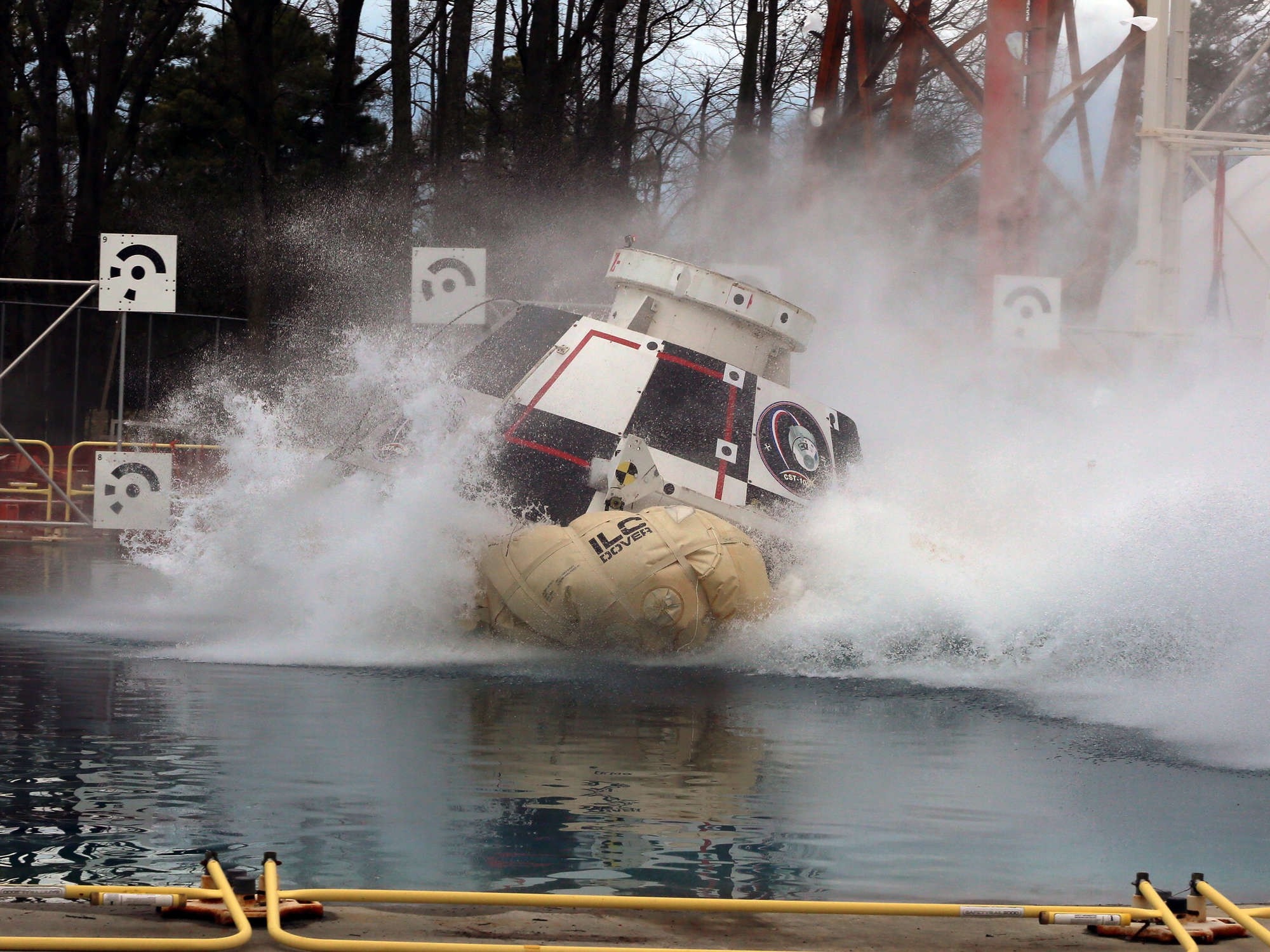
After carrying astronauts to space, Boeing's crew capsule, the CST-100, a.k.a. "Starliner", would use parachutes to land softly on the ground. But in some emergency situations, it might need to land in water, which is why the company recently dropped the Starliner into the 20-foot-deep pool at NASA’s Langley Research Center.
Boeing performed similar tests in August 2015--watch it get flung from a crane. Engineers like to do these tests from different heights and angles to account for all scenarios. No word yet on how the Starliner performed, but chances are, if it's built to handle going to space and back, it can handle a little water.
From the forests of Canada and the Pacific Northwest to the fire-prone landscapes of Florida, Daher Aircraft’s Kodiak and TBM platforms are playing an increasingly critical role in wildfire resp...
Airbus has launched Alpha Component Solutions, a 50:50 joint venture with Air France dedicated to delivering comprehensive A350 component support services. Jointly operated by Airbus and Air Fran...
Archer Aviation Inc. and ITA Airways, Italy’s national carrier and a member of the Lufthansa Group, have entered into a strategic partnership to advance the deployment of an all-e...
Qantas has announced a major investment in its De Havilland Dash 8 turboprop fleet, reinforcing its long-term commitment to maintaining reliable air links across regional Australia. As part...