


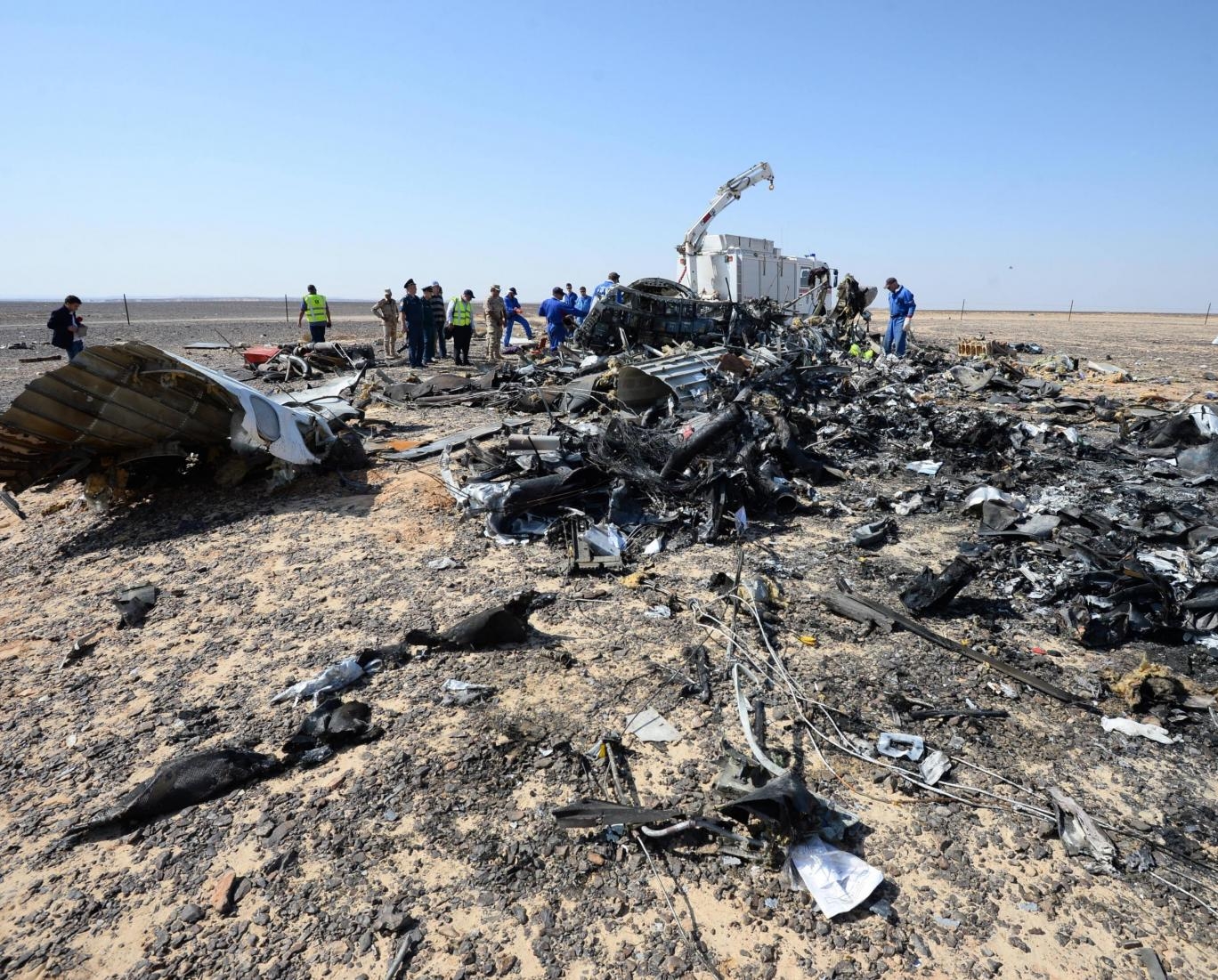
The Russian Airbus A321 plane crash could have occurred because a timed bomb was planted near the aircraft’s fuel line, media reports suggest.
Investigators have uncovered intelligence about a "two-hour timer," although it is not clear whether physical evidence to the effect has been found or the information comes from intercepted terrorist communications, Fox News reports citing an unanimous source.
However, it was not clear whether the lead about the timer came from intercepted communications between known terrorist operatives, or physical evidence, anonymous source identified as familiar with the investigation told Fox News in a report published on Thursday.
A second source, also speaking on condition of anonymity, said investigators were considering a theory that a bomb was placed at or near the fuel line or where it attaches to the engine, with the fuel burning off the explosive.
The report suggested this theory would account for the apparent lack of explosive residue in the wreckage.
The Airbus A321 plane crashed on its way from the Egyptian resort city of Sharm el-Sheikh to the Russian city of St. Petersburg on October 31, about 20 minutes into the flight. All 224 people on board, mostly Russians, were killed.
Embraer and Austrian Airlines have signed a Component Pool Program agreement to support the carrier’s fleet of 13 E195 aircraft. Under the agreement, Austrian Airlines will gain access to Embrae...
Unifi Aviation, part of Unifi LLC, has strengthened its presence in Europe with the launch of Unifi Aviation Jersey, bringing premium aircraft detailing and cleaning services to business aviation...
Emirates will introduce its Airbus A350 on the daily EK775/776 service between Dubai and Durban from 1 March 2027, extending its Premium Economy offering to all three of its South African destina...
Boeing forecasts that global air cargo traffic will double over the next two decades, driving the worldwide freighter fleet beyond 4,000 aircraft by 2045, according to its 2026 World Air Car...